Pahoran
Book of MormonPahoran is a Nephite chief governor during the Reign of the Judges, a political leader whose importance lies less in the length of his recorded career than in the crisis that tests his authority. He inherits the judgment-seat after Nephihah’s death, faces internal rebellion while the nation is threatened by war, and answers Moroni’s accusation with patience rather than wounded pride. His conduct turns a dangerous misunderstanding into a military and political alliance, making Pahoran a model of restrained leadership devoted to the glory of God, the freedom of his country, and the welfare of its people.
Identity and Political Background
Pahoran enters the record as the successor of Nephihah, the second chief judge. Nephihah dies in the same year that peace is restored to the people of Nephi and that displaced people are restored to their lands. The succession therefore occurs at a moment of apparent recovery, but the office Pahoran receives is already burdened with the responsibility of preserving justice after conflict. The judgment-seat is not presented as a hereditary kingship: Pahoran fills the seat of his father and begins his rule over the people of Nephi at the end of the twenty-fourth year, within the civic order that replaced Nephite kingship.
His office combines political leadership with judicial responsibility. The chief governor is expected to maintain public order and bring the wicked to justice according to their crimes, while also preserving the liberty that the people have chosen to defend. Pahoran thus stands at the meeting point of law, government, and war. His authority is constitutional rather than merely personal, and the crisis surrounding him tests whether that authority can survive when citizens, soldiers, and rival claimants interpret public duty differently.
The Crisis of Authority
Pahoran’s decisive conflict with Moroni begins through correspondence. Moroni, the chief captain over the army, believes that the government has failed to send necessary support to the soldiers. His anger is directed at Pahoran as chief governor, and the accusation threatens more than their personal relationship: it places military command against civil authority at a moment when the Nephite state is vulnerable.
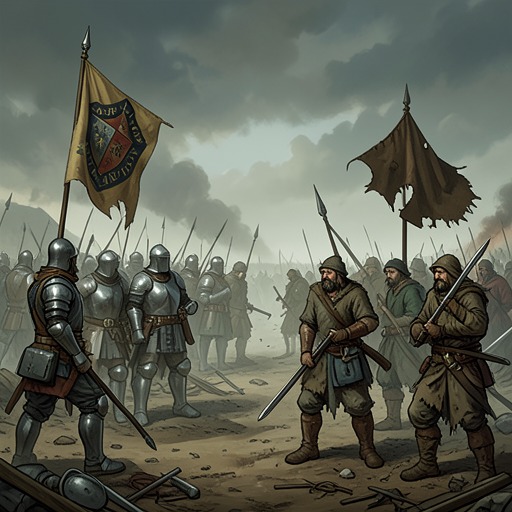
Pahoran’s reply reverses the emotional direction of the exchange. He identifies himself as the chief governor and tells Moroni that he does not take joy in the captain’s great distress, but he does not answer accusation with accusation. Instead, he explains that the government has been displaced by a rebellion. The king-men, or those who sought to restore royal rule, have taken possession of Zarahemla, while the legitimate government has been driven from the capital. The apparent absence of governmental assistance is therefore not indifference or cowardice; it results from the government’s own loss of control.
This revelation changes the meaning of Moroni’s earlier anger. The army and the government have been suffering from the same political catastrophe while lacking knowledge of each other’s circumstances. Moroni thought that Pahoran had abandoned the army; Pahoran had been forced out by an internal enemy. The letter therefore functions as an act of recognition: it exposes the hidden cause of the military shortage and restores the possibility of cooperation between the two offices.
Alliance with Moroni and Recovery of Zarahemla
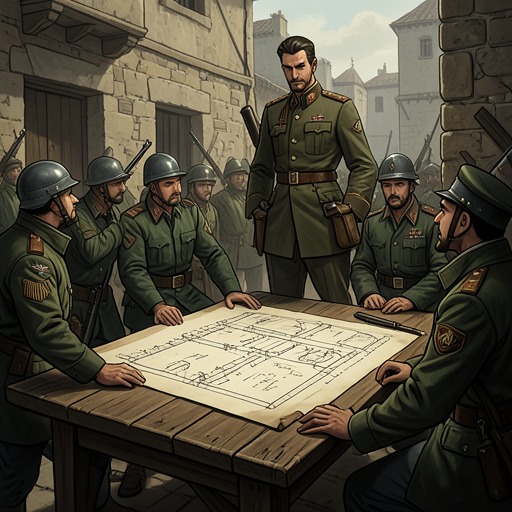
Pahoran’s answer does not remain a defense of his reputation. He asks Moroni to take a small number of men and come to his aid, while leaving Lehi and Teancum in command of the remainder of the army. Moroni accepts this request. He takes the smaller force, gives Lehi and Teancum responsibility for the rest, and marches to support the displaced governor.
The resulting movement joins military force to constitutional restoration. Moroni and Pahoran do not merely meet to settle a private quarrel; they go down with their armies into the land of Zarahemla and advance against the city held by the men of Pachus. Their meeting converts correspondence into coordinated action. The crisis that had divided military and civil leadership now produces a unified campaign against those who have seized the political center.
Pahoran’s role in the campaign is significant precisely because he does not try to preserve power by acting alone. He seeks assistance from the chief captain, and Moroni responds by reorganizing his forces so that the army can both aid Pahoran and continue its wider responsibilities. Their alliance restores a distinction that the rebellion had threatened to erase: civil legitimacy identifies the rightful government, while military command supplies the means to recover it.
Character, Relationships, and Narrative Function
Pahoran’s most important relationship is with Moroni. Their exchange begins in apparent hostility, but the hostility is produced by incomplete information rather than deep opposition. Moroni’s devotion to the army and the nation makes him suspect governmental failure; Pahoran’s position as an expelled governor gives him knowledge of the internal rebellion that Moroni lacks. Once the concealed circumstances are disclosed, both men subordinate personal grievance to the common cause.
Pahoran is also defined by contrast with the forces of Pachus and with the king-men. The rebels seek political control through possession of Zarahemla, while Pahoran represents lawful government displaced from its seat. The contrast is not simply between two armies. It is between authority exercised for the people’s freedom and authority pursued through seizure of the state. Pahoran’s legitimacy is shown through his willingness to request aid and cooperate, whereas the rebels’ power depends on occupying the capital.
His conduct also contrasts with the broader pattern of hardened unbelief and secret covenant-making found elsewhere in the record. The Book of Mormon describes communities whose hearts are hardened because of unbelief, and secret combinations that use signs and secret words to identify members and organize wrongdoing. Pahoran’s public letter works in the opposite direction: it makes the relevant facts known, names the political danger, and invites open cooperation. Where secret combinations protect wrongdoing through concealment, Pahoran restores order through disclosure and accountable action.
Change, Consequence, and Significance
Pahoran’s recorded arc moves from succession to displacement, from misjudgment to recognition, and from isolation to alliance. He first receives the judgment-seat after Nephihah’s death, then loses control of Zarahemla to the king-men, and finally regains a path toward restoration by explaining the crisis to Moroni. The movement is not a personal rise from weakness to strength so much as a test of whether a public office can remain legitimate when its institutional center has been captured.
The immediate consequence of Pahoran’s appeal is the joint march against Zarahemla. Moroni and Pahoran meet the men of Pachus with their armies, and the recovery of the city becomes possible through their combined leadership. The political crisis is therefore not solved by rhetoric alone. Pahoran’s words matter because they lead to a concrete redistribution of forces, a military advance, and the restoration of the government’s position.
Pahoran’s narrative significance lies in the disciplined form of his patriotism. He does not treat office as personal honor, and he does not answer Moroni’s anger by defending his dignity at the expense of the nation. His leadership is measured by the willingness to clarify, endure misunderstanding, request help, and act with others once the truth is known. In the larger pattern of the Book of Mormon, where liberty is repeatedly threatened by kingship, rebellion, warfare, and secret combinations, Pahoran represents a quieter political virtue: legitimate authority becomes credible when it serves justice, freedom, and the welfare of the country rather than the ruler’s pride.